Data vs Direction: What Options Traders Actually Need
When I first started trading options, I believed that more data would automatically make me a better trader. More charts, more indicators, more metrics, surely that had to help.
It didn’t.
In fact, the more information I added, the harder decision-making became. I wasn’t short on data. I was short on direction.
When Too Much Data Gets in the Way
Most trading platforms are excellent at showing information. Candlesticks, Greeks, IV, alerts, everything is available instantly. But staring at all of it at once often creates confusion instead of clarity.
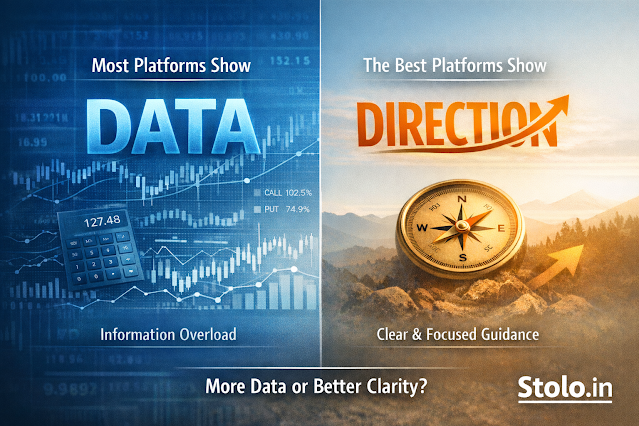
I’ve noticed that too much data doesn’t just overwhelm beginners. Even experienced traders fall into the trap of second-guessing themselves, overtrading, or reacting emotionally because there’s always one more signal suggesting something different.
At some point, data stops helping and starts distracting.
What Direction Actually Means in Options Trading
Direction doesn’t mean predicting the market correctly every time. For me, it meant having a clear framework before entering a trade.
Direction answers simple but important questions:
Why am I taking this trade?
What outcome am I expecting?
How much am I willing to risk if I’m wrong?
Once I started thinking in terms of strategies and scenarios instead of isolated signals, my trading felt calmer. I wasn’t reacting to every price move. I was following a plan.
Why Clarity Beats Complexity
One of the biggest improvements in my trading came not from adding tools, but from removing them. Fewer indicators, clearer rules, and defined risk made my decisions more consistent.

That’s also why I’ve started paying attention to platforms that focus on structure instead of speed. Tools like Stolo are built around helping traders plan and understand options strategies rather than just execute trades faster.
This approach encourages thinking before acting, something that’s surprisingly rare in fast-moving markets.
Better Thinking Leads to Better Decisions
Options trading is as much about psychology as it is about analysis. When decisions are made calmly and with structure, emotions have less control.
Having direction helped me:
Avoid unnecessary trades
Stick to predefined risk
Review outcomes objectively
Wins felt earned. Losses felt educational, not frustrating.
Choosing Direction Over Noise
Every options trader eventually faces the same choice:
add more information, or improve decision-making.
Data will always matter. But without direction, it’s incomplete.
From my experience, the traders who last aren’t the ones chasing every signal. They’re the ones who value clarity, follow systems, and focus on making better decisions, not faster ones.
In options trading, knowing what to ignore can be just as important as knowing what to watch.
Frequently Asked Questions
1. How can structured tools improve trading decisions?
Structured tools help traders plan trades in advance by defining entries, exits, and risk. This reduces emotional decision-making and makes outcomes easier to review objectively.
2. Can using the right platform reduce emotional trading?
Yes. Platforms that focus on clarity and structure can help traders avoid impulsive trades by encouraging planning and discipline rather than constant reaction.
3. How should options traders interpret Greeks without getting overwhelmed?
Instead of tracking every Greek, traders should focus only on the ones relevant to their strategy. Understanding how Greeks interact provides context without adding unnecessary complexity.
4. Why is clarity important in options trading?
Clarity helps traders stay disciplined, avoid overtrading, and manage risk more effectively. When decisions are planned calmly, emotions play a smaller role.
5. How can beginners improve decision-making in options trading?
Beginners can improve by slowing down, learning strategy basics, defining risk before entering trades, and using tools that emphasize structure rather than complexity.
6. How can PCR analysis help assess market sentiment?
Put-Call Ratio (PCR) analysis helps traders understand whether the market is leaning bullish or bearish by comparing put and call activity.
7. What should I look for in an options trading platform?
Look for clarity, ease of understanding, strategy visibility, and risk-awareness features. Platforms that help you think through trades can be more useful than those offering endless indicators.
8. Are simpler trading tools better for long-term consistency?
Often, yes. Simpler tools reduce cognitive overload and help traders stick to rules, which is key for long-term consistency.